Encounters with nature on Mountain Pastures Game Lodge
There’s something very special about Mountain Pastures, something that makes one want to visit time and again. For an avid hiker like me, having Mountain Pastures a mere 30 minute drive from home, is fabulous!
I’m doing the Buffalokloof trail today, the shortest of the five trails on offer, chosen specifically to allow me time to explore the biodiversity along the trail.
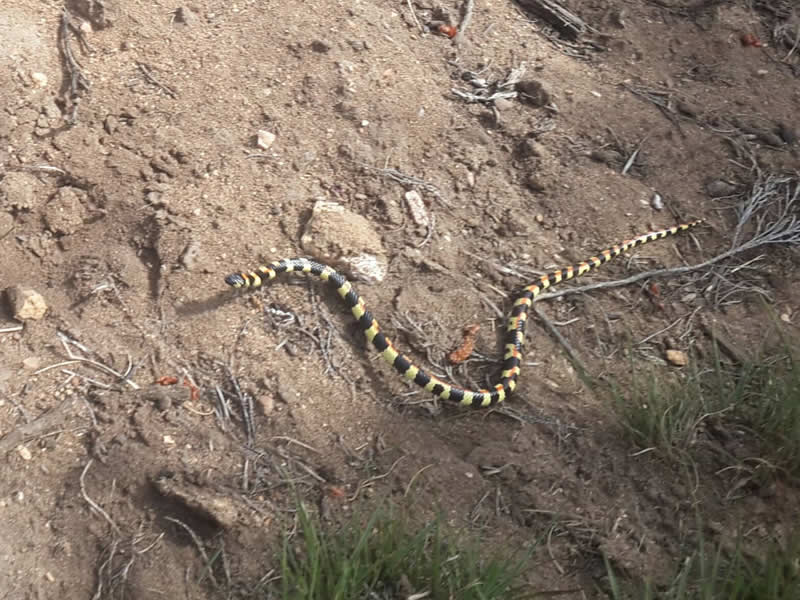
As I head off, a majestic Eland greets me in the distance, what a welcome! I’ve hardly entered the kloof when my eye catches a flash of colour on the ground. It’s the unmistakeable Spotted Harlequin snake, Homoroselaps lacteus. A small slender snake, and as it wriggles swiftly away through the undergrowth, I reflect on my astonishing luck in having this magical encounter. This is a secretive snake, nocturnal and spends most of its time underground. One may ask what it was doing out and about during the day. I can only presume that like some other snakes, they are ‘opportunistic’, able to change their behaviour according to conditions. They hibernate during winter, not feeding at all. Increased temperatures will result in them becoming active, and their first goal would be to hunt for prey, day or night.
I continue slowly up the gently inclining path in the kloof, stopping frequently to view the beautiful rock faces on either side of the kloof.
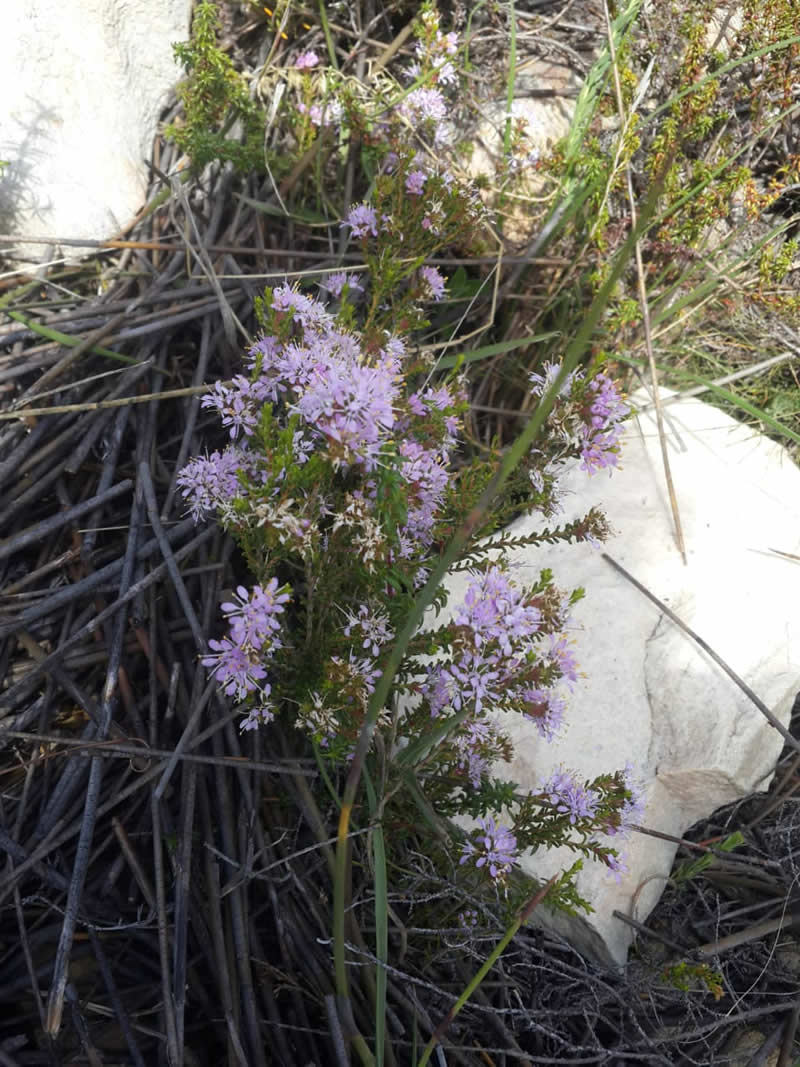
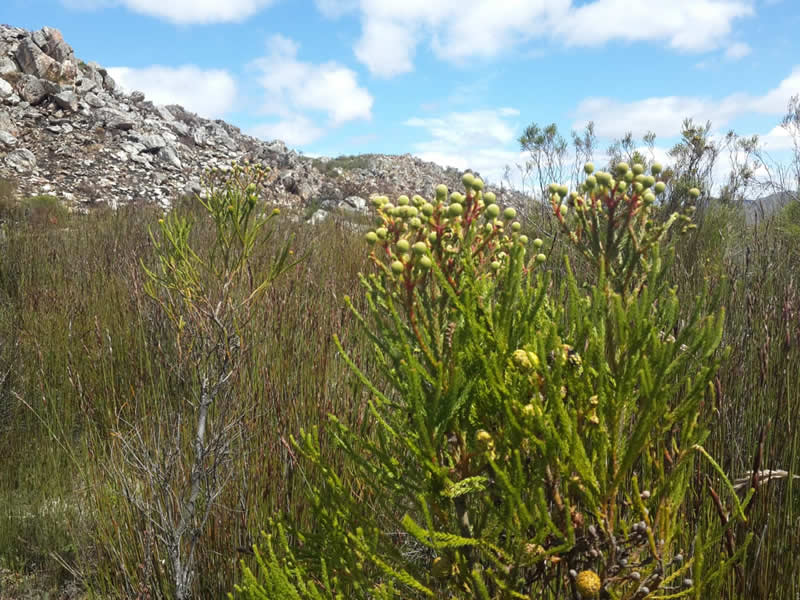
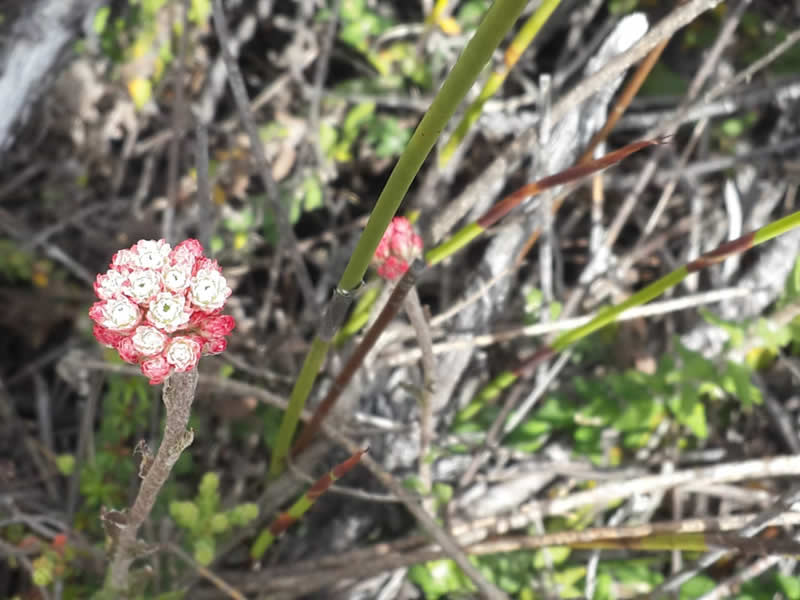
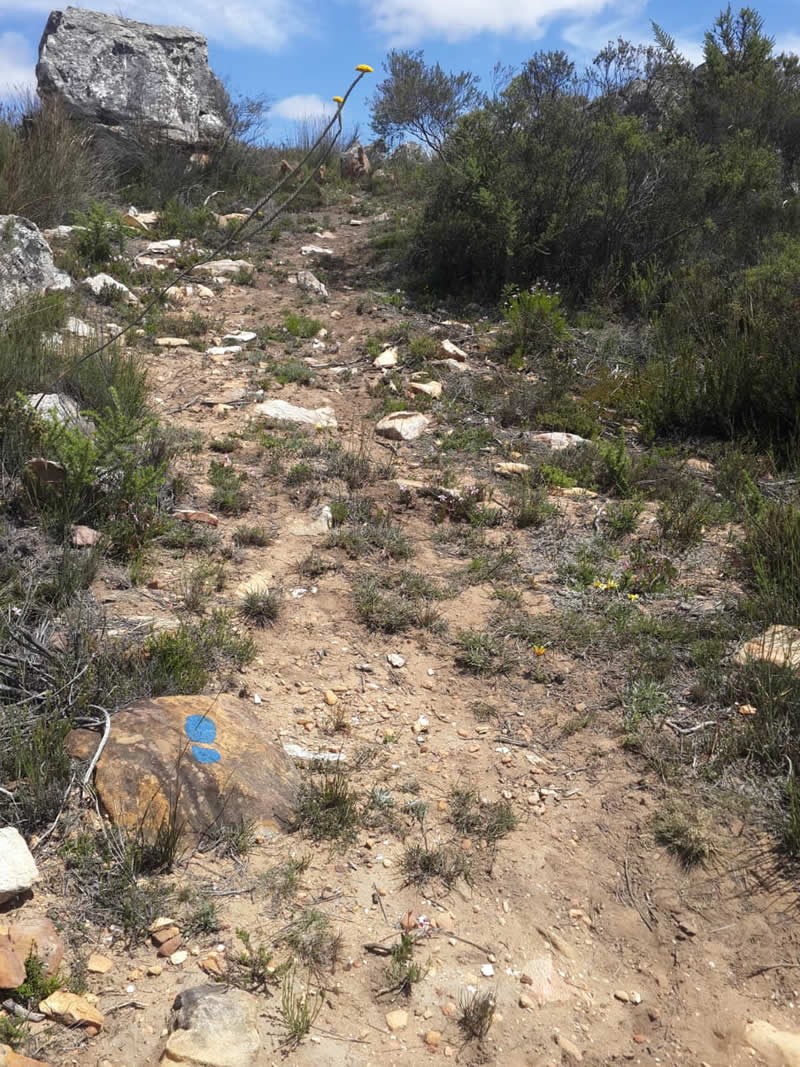
The trail exits near the top of the kloof, and heads in a westerly direction to the top of a rise. I stop to take in the great view of the Langkloof valley to the south. As I continue along the path, I am flanked by gorgeous fynbos species, including Erica, Brunia, Helichrysum (Strawflower), Felicia (Astertjie) and numerous Restio species. I stop to smell the lovely aroma of the mauve flowered Anysboegoe (Agathosma cerefolium).
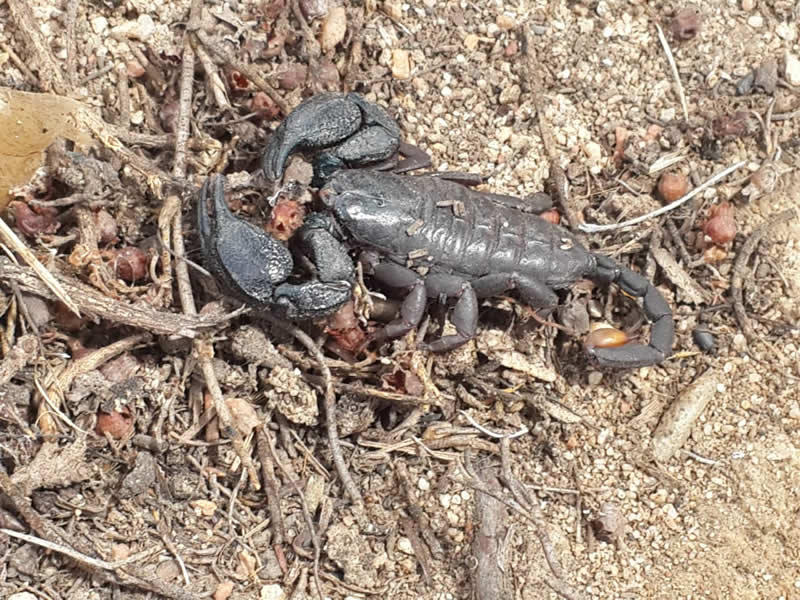
Inspecting rocks in this area, I am thrilled to find the black scorpion (Opistacanthus diremptus). These are very docile scorpions, the thin tail and thick pincers indicating that they are weakly venomous. Thus they use their pincers to crush prey.
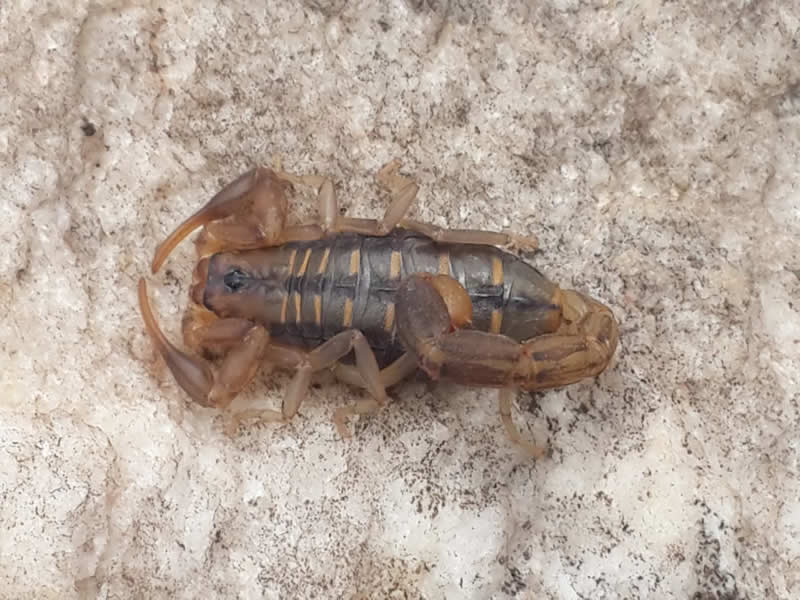
Moments later, I discover the tiny scorpion Uroplectes marlothi, with its two distinctive bands. Their venom is more potent than Opistacanthus, with thicker tails and thinner pincers. These scorpions run very fast, are quick to defend themselves and sting their victims repeatedly.
The views of the de Hoop valley to the north and the majestic Kammanassie mountain range to the north-east are stunning as I continue along the path. It is here that I discover four species of plants that I have not seen on previous Buffalokloof hikes. The farm has had a slightly higher rainfall this year, when compared to previous years. It may be that this was just enough to allow these species to flower.
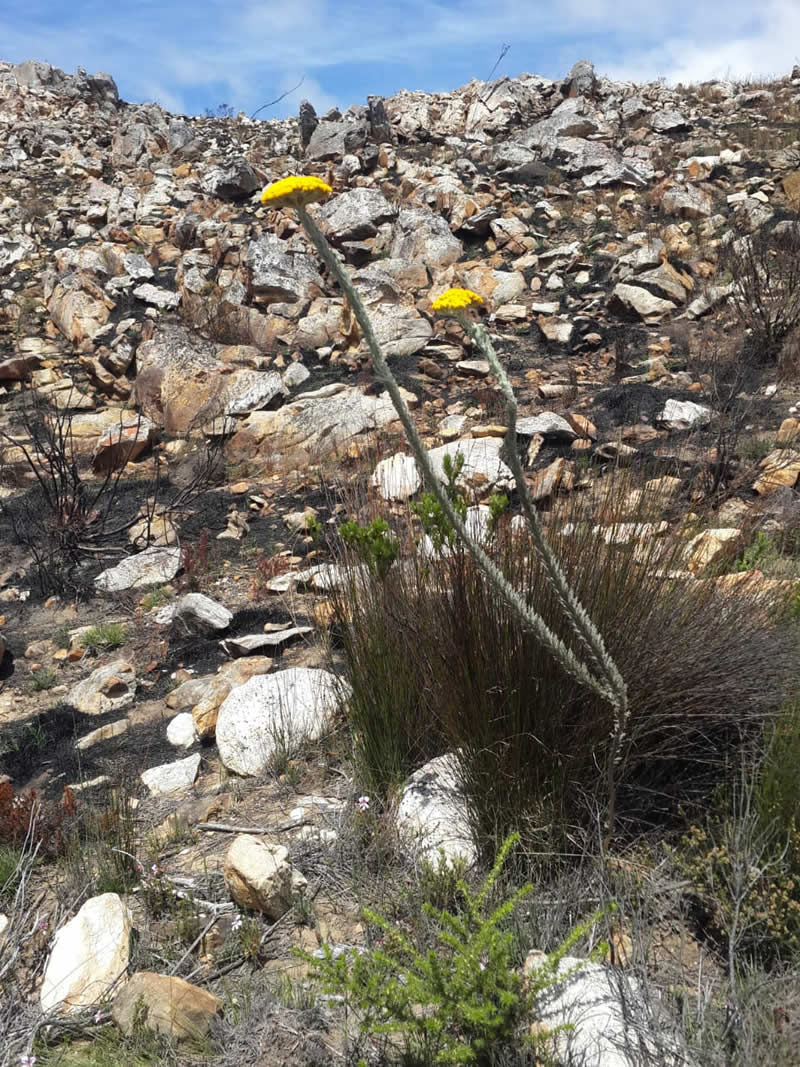
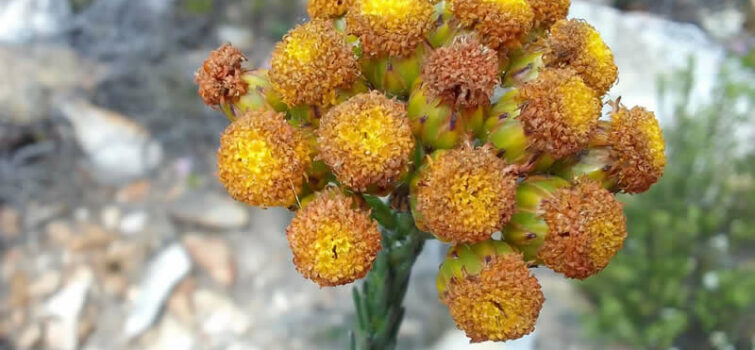
The very tall yellow flowered Athanasia pinnata and the tall Anathasia linifolia with its orange yellow flowers are eye-catching. The genus Athanasia is also commonly known as ‘Kouterbos’. This vernacular name derives from the tendency for plants of Athanasia trifurcate to pack up against the colter (kouter) of the plough. There are 40 species of Athanasia in SA, nine of which occur in the Klein Karoo.
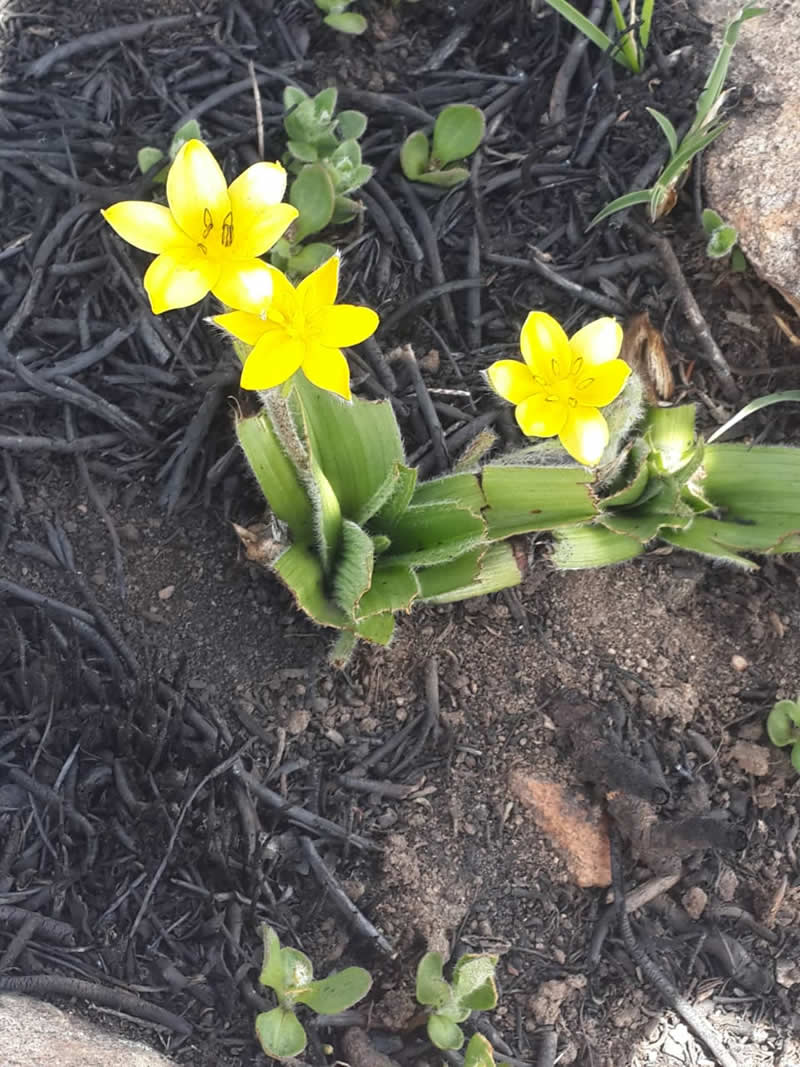
The Athanasia species dwarf the bright yellow flowered Hypoxis villosa. Only two of the ± 80 species occur in the Klein Karoo. The underground stems of some species of Hypoxis have been used for medicinal purposes for many years. The genus Hypoxis includes H.hemerocallidea, commonly known as the ‘African potato’.
A few meters further, I spot the small bulb Wurmbea variabilis. I smell the flowers of W.variabilis to confirm my identification – not a pleasant smell! This genus is pollinated by flies, attracted by the unpleasant smell. Three of the 37 species of Wurmbea occur in the Klein Karoo. They are dormant in summer, flowering in winter to spring.
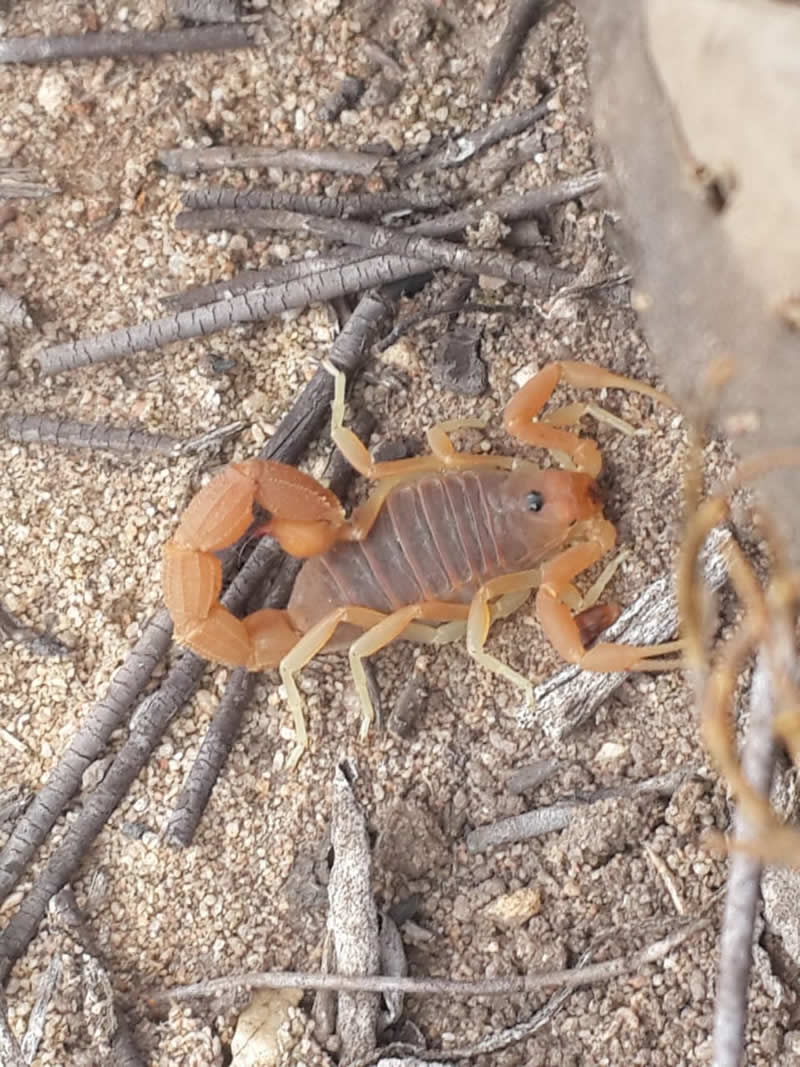
As if this is not enough, I inspect rocks around these plants, only to discover a third scorpion species! It is the beautiful orange-coloured Parabuthus planicauda and allows me to admire the flattened body, perfectly adapted for rocky habitats. One can clearly see that with its thick tail and thin pincers, this species is highly venomous. The genus Parabuthus contains 20 species, and they are the most venomous in southern Africa.
The trail descends in a westerly direction to the lower reaches of the farm before turning back eastwards towards the lodge. I head back reluctantly, but the sighting of Zebra, Springbok and a Scrub hare are the perfect end to a wonderful hike.
My plan to explore the biodiversity of Mountain Pastures exceeded all expectations! I haven’t even mentioned the rich insect and spider life observed on the trail. I’ll be back for another fabulous hike to focus on this.
The Buffalokloof trail is a circular trail within the game area. The paths are well set out and sign-posted, a perfect ‘family’ route. The trails on Mountain Pastures have been certified through the ‘World trails network’ organisation, and have been awarded ‘Green flag status’ which ensures trail users of a safe, quality experience.
Written by Dr Joy Coleman (PhD Zoology)